·
Men's Health
·
9 min read
If Your Testosterone Is "Normal" But You Still Feel Off — Your Doctor May Be Missing the Real Problem
The Hidden Enzymatic Process Called the "Two-Pathway Testosterone Drain" Is Quietly Eroding Your Free Testosterone — Even When Your Lab Numbers Look Fine
By Dr. Daniel Mercer, MD · Integrative Medicine Specialist
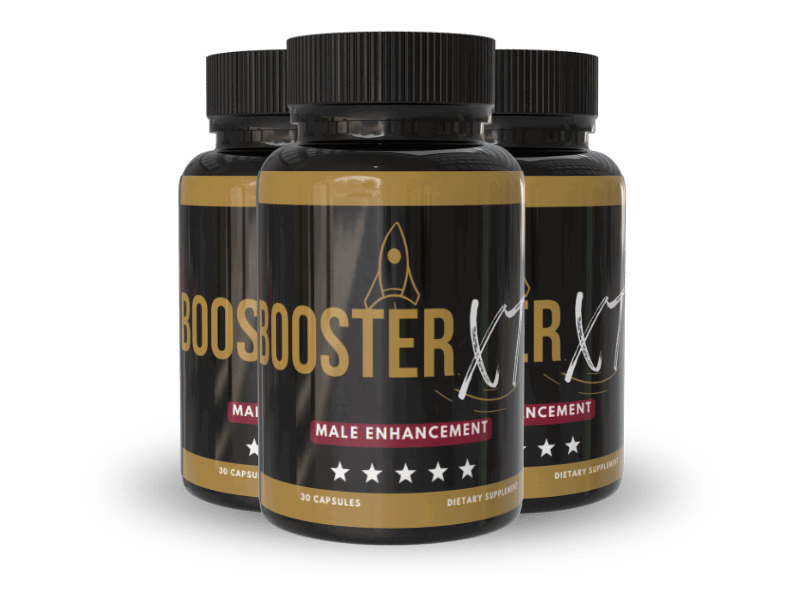
Affiliate disclosure: This article contains affiliate links to Booster XT. If you purchase through them, we may earn a commission at no extra cost to you.
Here is a conversation I have far more often than I expected when I began practicing integrative medicine.
A man comes in — mid-forties to late fifties — and describes the kind of decline that happens slowly enough that he almost convinced himself it was normal. The energy that used to carry him through the day now runs out by early afternoon. The drive that made him competitive, focused, and frankly hard to keep up with has gone quiet. In the bedroom, there's a gap between what he remembers and what he's experiencing that he doesn't quite know how to describe.
Then he tells me he's already had his testosterone checked. "My doctor said it's fine. A little low-normal, but fine."
This is where the problem begins.
I'm Dr. Daniel Mercer, and for the past fourteen years I've worked with male patients whose symptoms were dismissed because their total testosterone level fell within reference range. What I've come to understand — and what the pharmaceutical management of male hormonal health consistently fails to account for — is that total testosterone is not the number that determines how you feel.
Free testosterone is the number that matters. And free testosterone can be critically low even when the total looks fine on paper.
The reason is a process I call the Two-Pathway Testosterone Drain.
Why "Normal" Testosterone Doesn't Mean What You Think It Means
Standard blood panels measure total testosterone. This includes testosterone bound to proteins — primarily sex hormone-binding globulin (SHBG) and albumin — that renders it biologically inactive. Only the small fraction that remains unbound, the free testosterone, can actually enter cells and exert biological effects.
A man can have total testosterone at the midpoint of the reference range and still have free testosterone well below the level needed for normal energy, libido, and sexual function. This is not a rare edge case. In my clinical practice, it is extremely common in men over forty.
What's draining the free testosterone? Two enzymatic pathways operating simultaneously — and conventional medicine addresses neither of them.
The Two-Pathway Testosterone Drain
Pathway One: The Aromatase Conversion
Aromatase — encoded by the CYP19A1 gene — is an enzyme present in fat tissue, the liver, the brain, and the adrenal glands. Its function is to convert testosterone into estradiol, a form of estrogen. In men, a certain level of estrogen is physiologically necessary. The problem arises when aromatase activity becomes excessive — which it does predictably as men age, gain body fat, and accumulate inflammatory burden. As visceral fat increases, aromatase expression increases proportionally. More aromatase means more testosterone being converted to estrogen rather than remaining available as free testosterone.
The downstream consequences are not subtle: fatigue, emotional blunting, increased fat accumulation — particularly in the chest and midsection — reduced libido, and the kind of mental fog that feels like your edge has simply gone away.
Pathway Two: The 5-Alpha Reductase Conversion
The second pathway converts testosterone into dihydrotestosterone, or DHT, via the enzyme 5-alpha reductase type II. DHT is androgenic — it's several times more potent than testosterone at its receptor — but when it forms in excess, it drives prostate tissue proliferation, accelerates hair follicle miniaturization, and does not contribute to the energy, libido, and cognitive benefits that free testosterone provides.
The result of both pathways operating simultaneously: less free testosterone is available to do the work it's supposed to do. The man who feels off despite "normal" testosterone is, in most cases, experiencing the Two-Pathway Testosterone Drain in real time. And here is the key clinical point: no standard testosterone test will show this. Total testosterone can look fine. Symptoms don't.
Why Conventional Treatment Misses the Target
The pharmaceutical approach to male hormonal decline offers two primary tools: testosterone replacement therapy (TRT) and PDE5 inhibitors. Neither addresses the Two-Pathway Testosterone Drain.
Testosterone replacement adds exogenous testosterone — but that testosterone immediately enters the same enzymatic environment. It still gets converted by aromatase. It still gets converted by 5-alpha reductase. In some cases, TRT actually accelerates aromatase activity by providing more substrate. Men on TRT frequently find their estrogen levels rising — which is why oncologists and endocrinologists routinely co-prescribe pharmaceutical aromatase inhibitors (Anastrozole, Letrozole) alongside TRT.
Pharmaceutical aromatase inhibitors are effective. They are also, outside of cancer treatment, rarely discussed with patients — because the patent window on these drugs has closed, making aggressive marketing less economically viable. What is not discussed cannot be prescribed.
PDE5 inhibitors — Sildenafil (Viagra), Tadalafil (Cialis) — address one downstream consequence of the drain: insufficient blood flow for erection. They do this by blocking the enzyme that degrades cGMP, sustaining the smooth muscle relaxation that allows penile blood chambers to fill. They require functioning nitric oxide signaling to work at all, and they do nothing for libido, energy, or the upstream hormonal environment driving the deficiency. Both tools address consequences. Neither addresses cause.
The Seven Compounds That Target the Drain at Its Source
The encouraging development from the integrative medicine literature is this: there are natural compounds with documented mechanisms targeting both pathways of the Two-Pathway Testosterone Drain — as well as the vascular and foundational conditions that amplify it. Let me walk through each one.
Chrysin — Blocking the Aromatase Pathway Naturally
Chrysin is a bioflavonoid found in passionflower, honey, and propolis. Its relevant mechanism in male hormonal health is aromatase inhibition — it competes with testosterone for binding to the CYP19A1 enzyme, reducing estradiol conversion. A 2008 study published in the Journal of Endocrinology examined chrysin's effects on Leydig cells — the testicular cells that produce testosterone — and found that chrysin enhanced both steroidogenesis (testosterone production) and StAR protein gene expression, a key regulator of the rate-limiting step in testosterone biosynthesis. Chrysin is not as potent an aromatase inhibitor as Anastrozole — but it works through the same mechanism without the side effects that make pharmaceutical aromatase inhibitors inappropriate for long-term use in otherwise healthy men.
Saw Palmetto — Blocking the 5-Alpha Reductase Pathway
Saw palmetto extract (Serenoa repens) is the most clinically studied natural 5-alpha reductase inhibitor available. Its active fatty acids and sterols inhibit the enzyme that converts testosterone to DHT — the same mechanism employed by the pharmaceutical drug Finasteride, without Finasteride's documented risk of persistent sexual dysfunction. Saw palmetto has been studied extensively in the context of benign prostatic hyperplasia (BPH), where DHT excess drives prostate tissue proliferation, with multiple randomized controlled trials showing symptom improvements comparable to Finasteride in mild-to-moderate cases. Beyond prostate protection, saw palmetto has been shown to enhance nitric oxide production in peripheral vascular tissue — contributing directly to the blood flow component of male sexual function.
Tribulus Terrestris — Restoring the Upstream Signal
While chrysin and saw palmetto address the conversion pathways, Tribulus addresses the production side of the equation. Tribulus contains steroidal saponins — primarily protodioscin — that stimulate pituitary secretion of luteinizing hormone (LH). LH is the signal that travels to the Leydig cells of the testes and directs testosterone production. More LH means more testosterone being produced upstream — giving chrysin and saw palmetto more to work with as they reduce downstream losses. The research on Tribulus shows consistent support for libido and sexual function in clinical settings.
Hawthorn Berry — Restoring Vascular Delivery
Free testosterone circulating at healthier levels still needs to reach target tissues via the bloodstream. Hawthorn (Crataegus monogyna) is exceptionally rich in oligomeric proanthocyanidins (OPCs) and the flavonoid vitexin. Both compounds enhance nitric oxide release from vascular endothelium — including eNOS activation and reduction of oxidative stress that would otherwise degrade NO before it reaches its target. A randomized controlled trial published in PMC (PMC3350435) found that standardized hawthorn extract produced significant improvements in flow-mediated dilation — a direct clinical measure of endothelial function — in prehypertensive and mildly hypertensive adults.
Epimedium (Icariin) — Dual-Action Vascular and NO Support
Icariin, the primary bioactive flavonoid in Epimedium brevicornum (Horny Goat Weed), operates through a dual mechanism. First: it is a PDE5 inhibitor — the same class of mechanism that Sildenafil employs, blocking the enzyme that degrades cGMP and prematurely ends smooth muscle relaxation. Unlike pharmaceutical PDE5 inhibitors, icariin works gradually and does not require precise timing or create dependency. Second: it upregulates eNOS — the enzyme that produces endothelial nitric oxide. This means icariin is not merely preserving existing NO, but actively increasing the rate of NO production. Shindel et al. (2010, Journal of Sexual Medicine) documented both mechanisms in penile smooth muscle cells, establishing the dual erectogenic and neurotrophic basis for icariin's clinical utility.
Magnesium — The Overlooked Foundational Requirement
Testosterone biosynthesis is an enzymatic process. Enzymes require cofactors to function. Magnesium is a cofactor for over 300 enzymatic reactions — including multiple steps in the steroid hormone biosynthesis pathway. Studies consistently show that magnesium deficiency is associated with lower total and free testosterone in men. A study published in the Journal of Pharmaceutical and Biomedical Analysis (2011) found that magnesium supplementation in both athletes and sedentary men produced significant increases in free testosterone after four weeks. Approximately 50% of Americans are estimated to have suboptimal magnesium intake — and for men already experiencing hormonal decline, unaddressed magnesium deficiency acts as a brake on every other intervention.
Cissus Quadrangularis — Reducing the Inflammatory Suppression
Chronic inflammation suppresses testosterone production at two levels simultaneously: it directly impairs Leydig cell function (reducing testosterone synthesis), and it stimulates aromatase expression in adipose tissue (accelerating conversion). Cissus quadrangularis has been studied for its potent anti-inflammatory and antioxidant activity — with evidence showing reduction in inflammatory cytokines including IL-6 and TNF-α that are among the primary drivers of aromatase upregulation in aging men. Traditional medicine systems have used it for structural support and recovery; modern research increasingly points to its value as an adaptogenic anti-inflammatory with direct relevance to hormonal health.
What I've Seen in My Practice
About eighteen months ago, I began recommending a formulation that combines all seven of these compounds at clinical doses to male patients presenting with this symptom profile — low-normal testosterone, normal-looking labs, and the kind of vitality decline that conventional medicine sends home with a shrug.
Within two weeks, the first change most men notice is energy. Not stimulant energy — but the baseline daily vitality that had been quietly declining. The difference between running at 60% and running at full capacity. Men who had been rationing their afternoons, planning around their energy limits, describe the change as sudden clarity about how much ground had been lost.
By weeks four to six, the hormonal changes begin expressing themselves in the ways men care most about. The drive returns — the sense that things are worth pursuing rather than simply getting through. In the bedroom, reliability and quality return not as a manufactured effect requiring perfect timing, but as a natural restoration of what the body actually wanted to produce all along.
Several patients have re-tested their free testosterone at the three-month mark. The numbers confirm what they already knew they were feeling.
The Presentation That Keeps Getting Removed
The mechanisms I've described — aromatase inhibition, 5-alpha reductase blocking, LH stimulation — are not fringe ideas. They are the exact same mechanisms pharmaceutical companies have built billion-dollar drug categories around. Anastrozole for aromatase. Finasteride for 5-alpha reductase.
What's inconvenient is the implication: that natural compounds working through these same pathways represent a viable alternative for men in the early-to-moderate stages of hormonal decline — without the side effect profiles that make long-term pharmaceutical use complicated.
I recorded a presentation explaining the Two-Pathway Testosterone Drain in detail — the mechanisms, the clinical data, and the specific protocol that has produced the results I've described. It has been flagged and removed on several platforms. The link below leads to it directly.
⚠️ WARNING: Due to pressure from pharmaceutical industry groups, this presentation has been taken down and restored multiple times. Watch it while the link is active.
What People Are Saying
"I'd been on TRT for two years. It helped some things but my estrogen kept spiking and my doctor kept adjusting the protocol. I came off TRT eight months ago and started this instead. My free testosterone is higher now than it was on replacement. My doctor asked what I changed. I showed him the formula."
— Frank D., 54, Chicago, IL
"I had every symptom — fatigue, no drive, no motivation in the gym or anywhere else. My total T was 450, which my GP said was fine. It wasn't fine. Three months on this protocol and I feel like I did in my early forties. The energy alone would have been worth it."
— James H., 51, Phoenix, AZ
"The thing nobody told me was that my testosterone was probably fine but my free testosterone was the problem. This formula made sense of that for the first time. The results backed it up."
— Marcus T., 48, Dallas, TX
"I didn't need Viagra. I needed my hormones actually working. There's a difference. This is the first thing I've tried that understood that difference."
— Robert K., 57, Atlanta, GA
Before You Go
Total testosterone is the number your doctor measures. Free testosterone is the number that determines how you actually feel. And the process that converts one into the other — the Two-Pathway Testosterone Drain — operates continuously, silently, and almost entirely below the radar of standard medical practice.
The compounds I've described are not a workaround. They are a direct intervention on the specific enzymatic mechanisms driving the problem. Chrysin and saw palmetto address the two conversion pathways. Tribulus restores upstream production. Hawthorn Berry and Epimedium restore vascular delivery. Magnesium enables the synthesis. Cissus reduces the inflammation that suppresses everything else.
Watch the presentation. Read the evidence. Make your own decision. Your free testosterone deserves better than a normal-looking lab result and a shrug.
Dr. Daniel Mercer, MD, is a board-certified specialist in integrative medicine. The information in this article is for educational purposes only and does not constitute medical advice. Always consult a qualified healthcare provider before starting any new supplement protocol, particularly if you are taking prescription medications including testosterone therapy, aromatase inhibitors, or 5-alpha reductase inhibitors. Individual results may vary.
Affiliate disclosure: This article contains affiliate links. If you choose to purchase through links provided, Get Wellness Wire may receive a commission at no additional cost to you.
Scientific References
1. Wilt et al.. Cochrane meta-analysis: saw palmetto extract provided mild-to-moderate improvement in urinary symptoms and flow measures in BPH. Cochrane Database of Systematic Reviews, 2002. [PMID 16467543]
2. Kamenov et al.. Prospective double-blind RCT: Tribulus terrestris improved erectile function scores vs placebo over 12 weeks. Acta Physiologica Hungarica, 2014. [PMID 24630840]

By Dr. Daniel Mercer, MD
Integrative Medicine Specialist · Get Wellness Wire
Our editorial standards require all health claims to be grounded in available research and presented without exaggeration. We do not endorse products we cannot describe accurately and fairly.