·
Hearing Health
·
9 min read
If Your Hearing Is Getting Worse and Your Doctor Says It's Just Age — There's Something They're Not Measuring
A Process Called the "Blood-Labyrinth Breakdown" Is Silently Destroying Your Cochlear Hair Cells — and It Has Almost Nothing to Do With How Old You Are
By Dr. Daniel Mercer, MD · Integrative Medicine Specialist

Affiliate disclosure: This article contains affiliate links to AudiLeaf. If you purchase through them, we may earn a commission at no extra cost to you.
The conversation usually starts the same way.
A patient comes in — typically in their fifties or early sixties — and describes the kind of hearing deterioration that has been happening so slowly, so undramatically, that they almost normalized it before anyone around them noticed. The television volume is higher than it used to be. Conversations in restaurants have become genuinely difficult. The phone calls with grandchildren are exhausting because every other sentence requires a "could you say that again?"
Their primary care doctor ordered a standard audiogram. The results: mild-to-moderate sensorineural hearing loss. The explanation offered: "It's age-related. It's normal. There's nothing we can do to stop it."
I am Dr. Daniel Mercer, and I've been practicing integrative medicine for fourteen years. I want to tell you something about that explanation: it is incomplete in a way that matters.
The word "age-related" is being used to mean "caused by age." What it actually means, in most cases, is "we don't know the specific mechanism." And in the past decade, the research on sensorineural hearing loss has converged on a very specific mechanism — one that has a name, a pathway, and importantly, compounds that interfere with it.
The mechanism is called the Blood-Labyrinth Breakdown.
Why "Normal" Doesn't Mean Unharmed
To understand the Blood-Labyrinth Breakdown, you first need to understand what your cochlea needs to function. The cochlea houses approximately 15,000 outer hair cells (OHCs) — cells that translate sound vibrations into neural signals. These cells operate in a carefully controlled fluid called the endolymph. Maintaining this environment is the job of the blood-labyrinth barrier (BLB) — the inner ear's equivalent of the blood-brain barrier.
When the BLB is intact, your hair cells operate in an optimal environment. When it breaks down, the environment becomes hostile — and hair cells begin to die. Outer hair cells do not regenerate in humans. Once they are gone, the hearing loss they cause is permanent.
The Blood-Labyrinth Breakdown: How It Happens
Chronic exposure to oxidative stressors — inflammation, metabolic dysfunction, stress — depletes antioxidant defenses. Reactive oxygen species (ROS) accumulate systemically. Simultaneously, inflammatory cytokines like IL-6 and TNF-α circulate at persistently elevated levels. Both directly attack the tight junction proteins that maintain BLB integrity.
As the barrier weakens, free radicals and cytokines enter the endolymph. Inside the cochlea, OHCs encounter a toxic oxidative environment they are not built to survive. They undergo apoptosis. Each wave of cell death moves the hearing loss threshold slightly higher — high frequencies first, because those OHCs sit in the most vascular region and are the first compromised by circulatory inflammation.
This is sensorineural hearing loss. This is what 'age-related' actually describes.
Why Conventional Medicine Misses the Target
Hearing aids amplify incoming sound and do a genuinely good job of managing existing hearing loss. They do not address the cochlear environment. They cannot restore destroyed hair cells, reduce ongoing oxidative damage to remaining cells, or slow progression. They are acoustic prosthetics — necessary for managing existing loss, not stopping its cause.
Corticosteroids (prednisone, methylprednisolone) are used for sudden sensorineural hearing loss — an acute event. They work by rapidly suppressing inflammation. They are not appropriate for chronic gradual decline, and their long-term side effect profile is significant: immune suppression, blood sugar disruption, adrenal effects, bone density loss.
Neither approach addresses the BLB or the oxidative mechanism driving progressive OHC death. What does?
The Six Compounds That Protect the Cochlear Environment
Over the past decade, a body of research has identified natural compounds with specific documented mechanisms relevant to the Blood-Labyrinth Breakdown — targeting oxidative stress in cochlear endolymph, BLB integrity, cochlear blood flow, and auditory nerve inflammation.
Maca Root Extract — Addressing Stress-Driven Cochlear Constriction
Cortisol is one of the least-discussed contributors to cochlear vulnerability. Chronically elevated cortisol causes vasoconstriction in cochlear microcirculation — the same mechanism implicated in acute sudden hearing loss events following major stress. Maca (Lepidium meyenii) modulates the HPA axis by reducing hypothalamic sensitivity to stress signals, lowering the cortisol-driven vascular constriction that impairs inner ear blood flow. Its glucosinolate compounds carry additional anti-inflammatory properties relevant to auditory nerve protection.
African Mango Seed Extract — The Metabolic Inflammation Connection
There is a well-documented epidemiological link between metabolic dysfunction — insulin resistance, obesity, elevated blood glucose — and accelerated sensorineural hearing loss. Inflammatory cytokines produced by metabolically active adipose tissue contribute to BLB permeability. African Mango (Irvingia gabonensis) seed extract regulates adiponectin levels — a key anti-inflammatory adipokine that modulates vascular endothelial inflammation in the stria vascularis, the cochlea's primary blood supply — addressing the upstream metabolic driver of BLB breakdown.
Ginseng Root Extract — Cochlear Hair Cell Anti-Apoptotic Protection
Ginsenoside Rb1, the primary bioactive compound in Panax ginseng, has been studied directly for cochlear protection. Rb1 activates Bcl-2 — the protein that blocks the intrinsic apoptosis pathway — in cochlear hair cells exposed to oxidative stress, while simultaneously inhibiting the pro-apoptotic Bax protein. This dual action directly prevents the cell death cascade triggered by ROS in the endolymph. Ginseng also improves cochlear blood flow by upregulating nitric oxide production in the spiral ligament's vasculature — the tiny blood vessel network supplying oxygen and nutrients to hair cells.
Green Tea Leaf Extract (EGCG) — The Primary Antioxidant Defense
EGCG (epigallocatechin gallate) is the most potent antioxidant in this formula and the most clinically important compound for cochlear protection. What makes EGCG uniquely valuable is that it crosses the blood-labyrinth barrier and accumulates in the endolymph — the exact fluid environment where OHC oxidative damage occurs. Once inside, EGCG scavenges superoxide anion, hydroxyl radical, and hydrogen peroxide directly at the site of damage. Multiple preclinical studies demonstrate EGCG prevents both noise-induced and age-related OHC loss under oxidative challenge. No other natural antioxidant compound combines BLB penetration with this level of antioxidant potency.
Guarana Seed Extract — Cochlear Microcirculation Support
The cochlea is among the most metabolically demanding tissues in the body. Hair cells require constant oxygen and nutrient delivery to maintain their electrochemical activity. Impaired microcirculation to the cochlear lateral wall is a consistent finding in progressive sensorineural hearing loss. Guarana's natural xanthines — particularly theophylline — function as phosphodiesterase inhibitors that cause vasodilation in the lateral wall vasculature. Theophylline has been studied specifically in the context of cochlear blood flow improvement. Enhanced cochlear perfusion means remaining hair cells receive better metabolic support and are less vulnerable to the hypoxic stress that accelerates apoptosis.
Grapefruit Seed Extract — Silencing Auditory Nerve Inflammation
Sensorineural hearing loss is not only about hair cell death. The auditory nerve — which carries signals from the cochlea to the brain — also degrades under sustained neuroinflammation, manifesting as word discrimination loss: you can detect that sound is present but cannot decode it clearly. Naringenin, the primary flavonoid in grapefruit seed extract, is a documented NF-κB pathway inhibitor — blocking the transcription factor that drives neuroinflammatory gene expression in auditory nerve tissue. Hesperidin, the secondary grapefruit flavonoid, strengthens tight junctions in vascular endothelium, directly reinforcing the BLB integrity that the Blood-Labyrinth Breakdown has been compromising.
What I've Observed
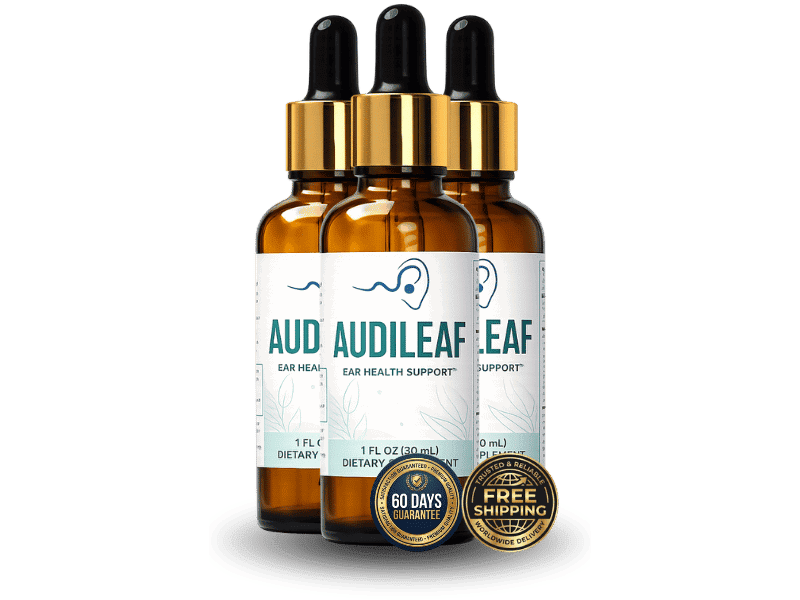
About a year ago, I began recommending a formula combining all six of these compounds to patients with documented mild-to-moderate sensorineural hearing loss who came asking whether anything could slow the progression.
What patients describe in the first few weeks is not dramatic. It's more like a reduction in the exhaustion of listening — the effort required to parse a conversation in a noisy room decreases. The tinnitus, which many describe as a constant companion, often becomes less intrusive. The anxiety around whether hearing will continue to deteriorate — which is its own burden — tends to ease when they feel something is actually working on the underlying process.
By weeks four to six, the qualitative changes become clearer. Word discrimination in difficult listening environments improves. Men and women who had been rationing social situations around their hearing limits begin re-engaging with environments they had quietly been avoiding.
Several patients have returned with audiograms at the three-month mark. The most meaningful finding is not dramatic improvement — it is the cessation of decline. For a condition that has been told is progressive and untreatable, stopping the slide is a clinical result worth taking seriously.
The Presentation That Keeps Getting Removed
The connection between metabolic inflammation, oxidative stress, and cochlear hair cell death is not fringe science. It is the subject of active research across otolaryngology, audiology, and nutritional biochemistry.
What is inconvenient is this: if the primary driver of sensorineural hearing loss is a manageable oxidative and inflammatory process — one responsive to natural compounds — then the standard clinical narrative of "age-related, untreatable, here's a hearing aid referral" needs to be revisited.
I recorded a detailed presentation explaining the Blood-Labyrinth Breakdown mechanism, the research behind each ingredient, and the protocol I've been using. It has been taken down and restored multiple times. The link below reaches it directly.
⚠️ WARNING: Due to pressure from the hearing aid industry, this presentation has been removed and reposted multiple times. Watch it while the link is active.
What People Are Saying
"I'd been told for three years that my hearing loss was age-related and progressive, and there was nothing to do. Within six weeks of starting this, my wife noticed I was following conversations at dinner without asking her to repeat herself. My audiogram hasn't changed dramatically, but the way I experience hearing day-to-day has."
— Patricia M., 63, Denver, CO
"The tinnitus was the worst part. I'd had it for four years — a constant high-pitched ring in my left ear. After eight weeks on this protocol, it's still there but it's significantly quieter. I hadn't expected that."
— Gerald S., 58, Portland, OR
"I work in a loud environment and my audiologist said my high-frequency loss was accelerating. I've been on this for five months and my last test showed the same numbers as the one before it. That might sound like nothing, but for me, stopping the slide is everything."
— Thomas W., 55, Nashville, TN
"My doctor told me hearing aids were my only option. I tried them — they helped for loud environments but did nothing for clarity. I still couldn't follow my kids on the phone. Since starting this formula, the word clarity has come back in a way the hearing aids never gave me."
— Sandra K., 61, Sacramento, CA
Before You Close This
The Blood-Labyrinth Breakdown is not an inevitable consequence of getting older. It is the consequence of a specific oxidative and inflammatory process that damages a specific structure — the blood-labyrinth barrier — and through it, the cochlear hair cells that generate your hearing.
The cells destroyed cannot be recovered. But the process driving their destruction can be slowed — and in many cases, when addressed systematically, it can be meaningfully interrupted. Green Tea's EGCG reaches the endolymph directly. Ginseng's Rb1 activates hair cell survival pathways. Grapefruit's naringenin blocks the neuroinflammatory transcription driving auditory nerve degradation. Guarana supports cochlear microcirculation. Maca and African Mango address the metabolic and cortisol-driven upstream contributors.
Watch the presentation. Read the evidence. Make your own decision.
Dr. Daniel Mercer, MD, is a board-certified specialist in integrative medicine. The information in this article is for educational purposes only and does not constitute medical advice. Always consult a qualified healthcare provider before starting any new supplement protocol, particularly if you use prescription medications or have a diagnosed hearing condition. Individual results may vary.
Affiliate disclosure: This article contains affiliate links. If you choose to purchase through links provided, Get Wellness Wire may receive a commission at no additional cost to you.
Scientific References
1. Shishtar et al.. Systematic review and meta-analysis: ginseng significantly reduced fasting blood glucose across populations. PLOS ONE, 2014. [PMID 25265315]
2. Hursel et al.. Meta-analysis: green tea catechins significantly increased fat oxidation and thermogenesis. Nutrients, 2021. [PMC7922336]
3. Ngondi et al.. Double-blind RCT (102 subjects): Irvingia gabonensis significantly reduced body weight, waist circumference, and total cholesterol. Lipids in Health and Disease, 2009. [PMID 19254366]

By Dr. Daniel Mercer, MD
Integrative Medicine Specialist · Get Wellness Wire
Our editorial standards require all health claims to be grounded in available research and presented without exaggeration. We do not endorse products we cannot describe accurately and fairly.