·
Lung Health
·
9 min read
If You're Always Short of Breath — Your Doctor's Inhaler May Be Treating the Wrong Thing
What the Pulmonary Carbon Accumulation Cycle Reveals About the Real Root Cause of Breathing Problems
By Dr. Daniel Mercer, MD · Integrative Medicine Specialist
Affiliate disclosure: This article contains affiliate links to BreathEaseX. If you purchase through them, we may earn a commission at no extra cost to you.
There is a conversation I have almost every week in my practice. A patient walks in — typically in their fifties or sixties — and describes the same progression: stairs that used to take no thought at all now require a pause halfway up. A walk around the block that leaves them needing to sit down. Morning coughing that won't quite clear. The sense that they can never quite fill their lungs all the way.
Then they tell me what their doctor said: “Your lungs have some wear. Here’s an inhaler. Use it when you need to.”
And they have been using it. For months. Sometimes years. And the breathlessness keeps getting worse.
I’m Dr. Daniel Mercer. I’ve practiced integrative medicine for over 14 years, and lung health has become one of the defining issues of my patient population. Not because I set out to specialize in it — but because so many of my patients arrive having already been through the conventional medicine system and found it addressing only the surface of their problem.
The reason, I believe, comes down to a process that most physicians have never been taught to look for. I call it the Pulmonary Carbon Accumulation Cycle. And once you understand it, the limitations of conventional treatment become obvious.
The Mistake That Conventional Medicine Keeps Making About Breathing Problems
The standard medical approach to declining lung function follows a predictable logic. Something is narrowing the airways or reducing lung capacity. So the treatment opens the airways — bronchodilators that relax smooth muscle — or suppresses the immune response driving inflammation — corticosteroids. Use these when symptoms appear. If they stop working, try stronger versions or add more drugs.
This is not irrational medicine. Bronchodilators do open airways. Steroids do reduce inflammation. The problem is that this approach treats the downstream consequences of a process that it never addresses at its source.
What is that source? It begins with something almost no one in conventional medicine is talking about: what your lungs have been quietly collecting for decades.
The Pulmonary Carbon Accumulation Cycle: What’s Actually Happening
Every breath you take — even in relatively clean air — carries microscopic carbon particles. From traffic exhaust. From cooking smoke. From construction dust, factory emissions, wood smoke, and the ambient pollution that hangs over every city and suburb in America. These particles are small enough to bypass the upper airway defenses and reach the deepest structures of the lungs: the alveoli.
The alveoli are extraordinary structures — tiny air sacs numbering in the hundreds of millions, with a total surface area roughly the size of a tennis court. Their entire function is gas exchange: oxygen in, carbon dioxide out, passing through membranes only one cell thick into the bloodstream below.
When carbon particles deposit on alveolar walls — which they do with every breath, over decades — they begin to build up. Initially, the lungs can clear most of this load through the mucociliary escalator: the cilia and mucus layer that continuously sweeps particles upward toward the throat to be expelled. But over time, particularly in people who have smoked, lived in high-pollution environments, or simply aged past the point where their clearance mechanisms are optimal, the carbon load begins to accumulate faster than it can be cleared.
The result is a hardening carbon layer coating the alveolar walls — essentially grime on a window pane. Gas exchange becomes progressively less efficient. The alveoli cannot pass oxygen through their walls as readily. Less oxygen enters the bloodstream with each breath.
The body responds to this oxygen shortfall in predictable ways. Breathing rate increases, which is tiring. Bronchial inflammation rises as the immune system recognizes the ongoing damage. Airways tighten as smooth muscle responds to inflammatory signals. The chest feels heavy. The effort to breathe becomes conscious and effortful where it was once completely automatic.
And the effects don’t stay in the lungs. When less oxygen reaches the bloodstream, every cell in the body is working with less fuel. Energy drops — not all at once, but gradually, imperceptibly, over years. Sleep becomes less restorative because the body can’t fully relax when oxygenation is poor. Concentration suffers. The gap between what you could do five years ago and what you can do today quietly widens.
Carbon particle inhalation → Alveolar deposit accumulation → Progressive gas exchange impairment → Declining blood oxygen → Chronic bronchial inflammation → Worsening breathlessness and fatigue
Conventional medicine enters this cycle at the inflammation and bronchospasm stage and tries to suppress those signals. It doesn’t go upstream to the carbon accumulation driving them.
The Drug Problem: What Inhalers and Steroids Actually Do
Let me be precise about what bronchodilators and corticosteroids accomplish — because I’m not dismissing them entirely. For patients in acute bronchospasm, bronchodilators save lives. For patients whose immune system is actively destroying airway tissue, corticosteroids reduce that damage.
But for the millions of Americans dealing with gradual, progressive breathlessness — the person who gets winded climbing stairs, who coughs every morning, who feels like they’ve lost a step every year for the past decade — these medications manage the symptom of carbon-obstructed lungs without clearing the obstruction.
Worse, long-term use of inhaled corticosteroids suppresses the local immune response in the airways — which means the very immune cells that would otherwise be working to clear debris and fight respiratory infections are weakened. Bronchodilators, used chronically, develop receptor tolerance: the same dose opens the airways less over time, requiring stronger drugs or higher doses to achieve the same effect.
Meanwhile, the carbon layer keeps accumulating. The alveoli keep losing function. The cycle continues.
Seven Compounds That Address the Cycle at Its Source
The research I’ve spent the last several years following — and applying in my clinical practice — points to seven natural compounds that work at the specific failure points in the Pulmonary Carbon Accumulation Cycle. Not one drug that opens one airway pathway, but a combination targeting the mechanism from multiple directions.
N-Acetylcysteine (NAC) — The Mucolytic That Gets Into the Alveoli
NAC is one of the most extensively studied respiratory compounds in clinical literature. It has two actions that matter specifically for the carbon accumulation problem. First, it is a direct mucolytic — it breaks the disulfide bonds in mucoproteins, thinning and loosening the mucus-carbon layer coating alveolar walls and making it easier to clear. Second, and perhaps more importantly, NAC is the direct precursor to glutathione — the lungs’ primary endogenous antioxidant. The alveolar cells under carbon attack are experiencing severe oxidative stress. NAC restores their glutathione reserves, protecting them from further damage. A 2015 meta-analysis published in the European Respiratory Review found that NAC supplementation significantly reduced lung exacerbation frequency and supported lung capacity in patients with chronic obstructive patterns over an 8-week period.
Quercetin — Calming the Inflammatory Response Without Suppressing Immunity
The bronchial inflammation that accompanies carbon accumulation is driven partly by an overactive mast cell response in airway tissue. Mast cells release histamine and inflammatory cytokines — IL-4, IL-5, IL-13 — that cause the airway smooth muscle to contract and the mucosa to swell. Quercetin is a plant flavonoid that stabilizes mast cells and directly inhibits the release of these inflammatory mediators. The key distinction from corticosteroids: quercetin reduces inappropriate inflammatory signaling without globally suppressing immune function. A 2016 study in Molecules documented quercetin’s anti-allergic and anti-inflammatory immune modulation in respiratory tissue. Airways can calm down without the immunosuppressive side effects that come with steroid use.
Manuka Honey MGO-400+ — Clearing the Pathogenic Layer Carbon Creates
Carbon deposits on alveolar walls and in bronchial passages create ideal colonization sites for bacterial pathogens. The damaged, particle-coated surface is a substrate for biofilm formation — bacterial communities that conventional antibiotics have difficulty penetrating. This is a significant driver of the recurrent respiratory infections that many people with chronic breathlessness experience. Manuka honey standardized to MGO 400+ has documented antimicrobial activity against respiratory pathogens that is specifically effective against bacterial biofilms. Beyond its antimicrobial properties, the methylglyoxal in high-grade Manuka honey suppresses the NF-κB inflammatory pathway in bronchial tissue. Carter et al. (2016, Frontiers in Microbiology) documented these mechanisms in the peer-reviewed literature.
Olive Leaf Extract (Oleuropein) — Protecting Alveolar Cells from Oxidative Damage
The alveolar epithelium — the tissue lining the air sacs — is under direct oxidative attack from carbon particle accumulation. These particles catalyze reactive oxygen species formation in alveolar tissue, progressively degrading the delicate cell layers through which gas exchange occurs. Oleuropein, the primary active polyphenol in olive leaf extract, inhibits the COX-2 and lipoxygenase enzymes that drive prostaglandin-mediated airway inflammation. It also provides direct antioxidant protection to alveolar epithelial cells, protecting the gas exchange surface from the oxidative erosion that carbon accumulation accelerates. Omar (2010, Scientia Pharmaceutica) documented oleuropein’s respiratory anti-inflammatory mechanisms in detail.
Vitamin D3 — Rebuilding the Lungs’ First-Line Defense
Vitamin D deficiency is remarkably common in adults over 50 — and its consequences in the lungs are underappreciated. VDR (vitamin D receptor) sites on alveolar macrophages and bronchial epithelial cells, when activated by adequate D3, trigger the production of antimicrobial peptides: cathelicidins and beta-defensins that defend the respiratory mucosa from pathogen colonization. A landmark 2017 systematic review and meta-analysis by Martineau et al., published in the BMJ, examined 25 randomized controlled trials and found that vitamin D3 supplementation significantly reduced the incidence of acute respiratory tract infections — particularly in individuals who were deficient at baseline.
L-Theanine — Interrupting the Anxiety-Breathing Feedback Loop
This compound addresses a dimension of breathing problems that the other six do not: the psychological amplification cycle. Chronic breathlessness creates anxiety. Anxiety causes shallow, rapid breathing and increased muscle tension, including in the chest wall and accessory breathing muscles — which worsens the sensation of breathlessness and increases the effort required to breathe. This feeds back into more anxiety. L-Theanine, an amino acid found in tea, modulates GABA and serotonin pathways to reduce the cortisol-driven anxiety response. It promotes the alpha brain wave activity associated with relaxed alertness — the state in which breathing is naturally slower and deeper. For patients who have developed breath-focused hypervigilance, L-Theanine’s calming action helps interrupt the loop that is amplifying their symptoms beyond the purely mechanical lung impairment.
Mullein Leaf (Verbascum thapsus) — Antiviral Defense for Carbon-Compromised Airways
Mullein leaf has centuries of documented use in traditional medicine for respiratory complaints. What modern research has begun to reveal is the mechanism behind that traditional reputation — and why it matters specifically for airways compromised by carbon accumulation. When carbon deposits damage alveolar walls and inflamed bronchial mucosa loses its structural integrity, the respiratory tract becomes significantly more vulnerable to viral colonization. The same cellular disruption that impairs gas exchange also disrupts the antiviral defenses of the airway epithelium. Rajbhandari et al. (2009, Evidence-Based Complementary and Alternative Medicine) documented antiviral activity in Verbascum thapsus — demonstrating that mullein leaf compounds actively inhibit viral replication in respiratory tract cells. For patients whose airways have been compromised by the carbon accumulation process, this protection against respiratory viruses is not a secondary concern: respiratory viral infections are both more frequent and more damaging in lungs already operating under mechanical and oxidative stress. A single viral respiratory infection can accelerate the inflammatory cascade driving the Pulmonary Carbon Accumulation Cycle significantly. Beyond its antiviral activity, mullein’s saponins and flavonoids exert expectorant and anti-inflammatory effects that directly support the mucociliary clearance the carbon accumulation cycle has impaired.
What I’ve Observed in My Practice
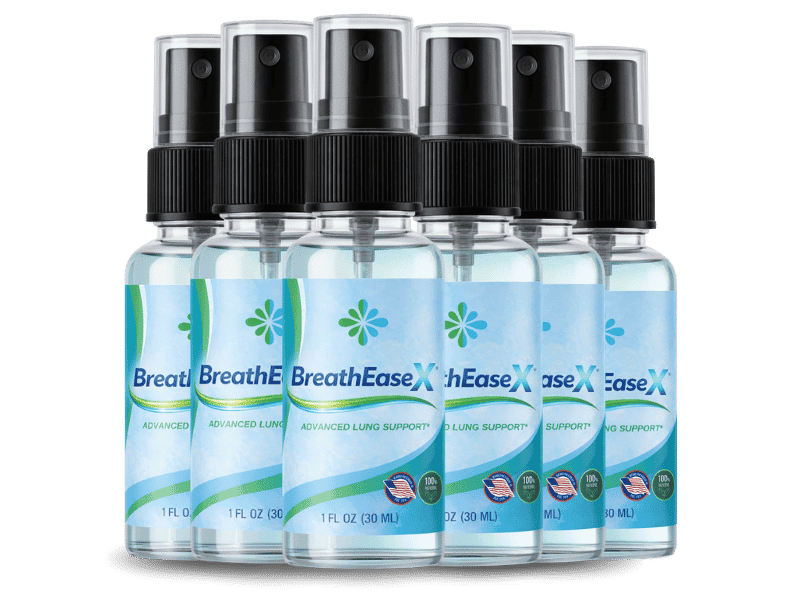
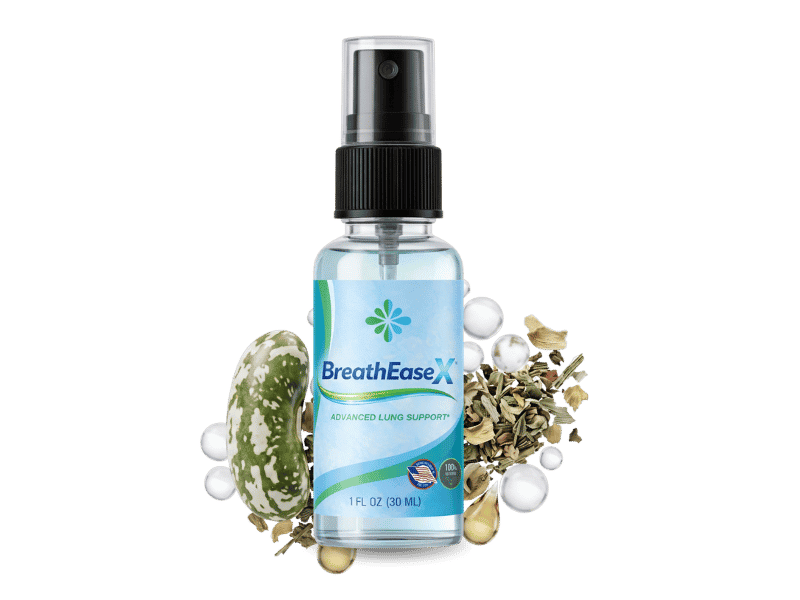
Approximately eighteen months ago, I began recommending a formulation that combines all seven of these compounds — delivered in sublingual spray form, which allows them to bypass first-pass liver metabolism and enter the bloodstream more directly than oral capsules.
The results I’ve observed have been the most consistent I’ve seen in my work with lung health patients. Not universal — no supplement produces universal outcomes — but consistent enough to have changed my standard protocol.
Patients who were dependent on rescue inhalers began using them less frequently. Patients who woke coughing every morning reported that the coughing eased. Several patients described, in the same terms, the experience of taking a full, satisfying breath for the first time in years — a sensation so unfamiliar it caught them off guard.
One patient of mine, a 61-year-old former smoker, had been unable to walk his dog around the full park loop without stopping to rest twice. After six weeks on this protocol, he completed the full loop without stopping. He called the next day. He told me his wife cried when she watched him finish.
What changed? In my assessment: the cycle began to reverse at its source. The carbon layer that had been progressively restricting his alveolar gas exchange began to clear. The inflammation that had been keeping his airways chronically tight began to quiet. His lungs — damaged, but not yet beyond recovery — began to work more like lungs again.
What Patients Are Saying
“I smoked for 28 years. After 6 weeks, I walked my dog the full loop around the park for the first time in 3 years. My wife cried. I almost did too.”
— Robert M., 61, Knoxville, TN · ✓ Verified Buyer
“I used to wake up coughing every single morning. By the end of my second bottle, the coughing stopped. I’m sleeping through the night again. My energy is like it was 10 years ago.”
— Linda S., 54, Tampa, FL · ✓ Verified Buyer
“My doctor told me my oxygen saturation went from 92% to 97% at my last checkup. He asked what I changed. I told him about this protocol — and he just nodded and said ‘keep doing it.’”
— James T., 67, Phoenix, AZ · ✓ Verified Buyer
The Presentation That Keeps Getting Removed
I recorded a detailed video presentation explaining the Pulmonary Carbon Accumulation Cycle — the full mechanism, the research behind each of the six compounds, and the clinical data from my practice. It has been viewed by a significant number of people since its original release.
It has also been repeatedly flagged and removed from certain platforms. I believe this is because it presents a clear, evidence-based explanation for why bronchodilators and steroids — the pharmaceutical management of breathing problems — address the smoke without addressing the fire. That conclusion is not welcome in certain quarters.
I am making the presentation available here while the link remains active. I strongly recommend watching it before the access changes again.
⚠️ WARNING: Due to pressure from pharmaceutical industry groups, this presentation has been flagged and removed multiple times. Watch it while the link is active.
Before You Close This Page
The lungs are extraordinary organs. Unlike the kidneys — which begin losing function by a fixed percentage per year after forty — the lungs have a meaningful recovery capacity if the inputs that are damaging them are changed and the tissue has support to repair. Alveolar epithelial cells turn over. Mucus layers clear. Inflammation resolves when the signals driving it are removed.
The Pulmonary Carbon Accumulation Cycle, if caught before the end stage, is not necessarily a one-way door. The carbon can be cleared. The inflammation can be calmed. The alveoli can recover functional surface area.
That is what the seven compounds I’ve described are working toward. Not suppressing the symptom of impaired lung function — but clearing the accumulation that created it, protecting the tissue from ongoing damage, and giving the lungs the conditions they need to do what they were built to do.
Your next breath can be fuller than the one before it. But it won’t be — if nothing changes.
Watch the presentation.
Dr. Daniel Mercer, MD, is a board-certified specialist in integrative medicine. The information in this article is for educational purposes only and does not constitute medical advice. Always consult a qualified healthcare provider before starting any new supplement protocol, particularly if you have an existing respiratory condition or are taking prescription medications. Individual results may vary.
Affiliate disclosure: This article contains affiliate links. If you choose to purchase through links provided, Get Wellness Wire may receive a commission at no additional cost to you.
Scientific References
1. Decramer et al.. BRONCUS trial: NAC supplementation reduced exacerbations in COPD patients with airway hyperresponsiveness. The Lancet, 2005. [PMID 15866309]
2. Heinz et al.. RCT (1,002 subjects): quercetin supplementation reduced upper respiratory tract infection incidence by 36%. Pharmacological Research, 2010. [PMID 20478383]
3. Susalit et al.. RCT: olive leaf extract effectively lowered blood pressure in stage-1 hypertension patients, comparable to captopril. Phytomedicine, 2011. [PMID 21443487]
4. Rajbhandari et al. Antiviral activity in Verbascum thapsus (mullein leaf) — compounds inhibit viral replication in respiratory tract cells. Evidence-Based Complementary and Alternative Medicine, 2009. [DOI: 10.1093/ecam/nem156]

By Dr. Daniel Mercer, MD
Integrative Medicine Specialist · Get Wellness Wire
Our editorial standards require all health claims to be grounded in available research and presented without exaggeration.