Get Wellness Wire
·
Men's Health
·
9 min read
If You’re a Man Over 40 and Your Energy, Drive, and Confidence Keep Fading — Your Doctor Likely Hasn’t Tested for the Two Things That Actually Matter
The Vitality Signal Failure: Two Simultaneous Biological Declines — and the Nine-Molecule Protocol That Restores Both
By Dr. Daniel Mercer, MD · Integrative Medicine Specialist

Affiliate disclosure: This article contains affiliate links to Vigortrix. If you purchase through them, we may earn a commission at no extra cost to you.
There is a pattern I have seen too many times to dismiss.
A man in his 40s — or 50s, or 60s — comes in after years of declining energy and drive. He works out more than he used to. He sleeps reasonably well. He takes care of himself by most reasonable definitions. And yet: the energy that used to carry him through the day now runs out by early afternoon. The confidence and drive that once felt automatic now take real effort to summon. His doctor runs a standard panel, everything comes back “normal,” and he is told that this is simply what getting older feels like.
I am Dr. Daniel Mercer, and after fourteen years in integrative and men’s medicine, I can tell you with confidence that “this is just aging” is almost never the complete explanation.
What I observe in these men — consistently, across hundreds of patients — is a specific, identifiable, addressable biological failure. Not one failure. Two. Occurring simultaneously. Feeding each other.
I call this the Vitality Signal Failure.
The Two Signals That Power a Man’s Energy, Drive, and Performance
Signal One is nitric oxide (NO) — the molecule your endothelial cells produce to control vascular tone and blood flow. When NO production is adequate, vessels dilate efficiently, blood flow is optimized, and every tissue in your body receives what it needs. When NO declines, the entire circulatory system functions below capacity.
Signal Two is the testosterone-dopamine axis. Testosterone requires a signaling cascade: dopamine stimulates the hypothalamus to release GnRH → pituitary releases LH → testicular Leydig cells convert cholesterol to testosterone. Zinc serves as an essential cofactor in that final enzymatic conversion. When dopaminergic signaling weakens with age — compounded by chronic stress and zinc depletion — testosterone production slows at the source.
Two failures. One shared upstream cause: chronic oxidative stress.
Why Standard Options Fail to Break the Cycle
PDE5 inhibitors (Viagra, Cialis) maintain the downstream NO signal that exists rather than restoring the upstream NO production that has declined. They do not address the testosterone-dopamine axis, do not restore energy or drive, and cost $30–$80 per dose with a prescription required.
Testosterone Replacement Therapy directly supplants endogenous testosterone without restoring the dopaminergic signaling that drives natural production. It causes testicular atrophy as LH stimulation ceases, requires ongoing blood monitoring, and does nothing for nitric oxide production.
Stimulants mask fatigue through sympathetic activation while accelerating the adrenal depletion that worsens the hormonal disruption long-term. None address both failures simultaneously.
The Nine-Molecule Protocol
Research in vascular biology, hormonal medicine, and nutritional biochemistry has identified naturally-occurring compounds with documented actions relevant to both signals of the Vitality Signal Failure.
L-Citrulline — The Blood-Flow Amplifier
L-Citrulline is converted in the kidneys to L-arginine — the direct substrate for eNOS, the enzyme that produces NO. Unlike direct L-arginine supplementation (largely degraded in gut and liver), citrulline bypasses first-pass hepatic metabolism and achieves sustained plasma arginine elevation. Clinical studies confirm L-Citrulline raises plasma arginine 2–3x and measurably improves circulation-dependent performance in men.
L-Carnitine — The Energy Converter
L-Carnitine is the molecular transporter that shuttles long-chain fatty acids across the inner mitochondrial membrane for beta-oxidation — fat to ATP. Without adequate carnitine, mitochondria cannot access fatty acids as fuel. L-Carnitine biosynthesis declines with age, contributing directly to the fatigue and energy deficits that characterize the Vitality Signal Failure. Studies also show L-Carnitine supports androgen receptor density in muscle tissue, making available testosterone more effective at the cellular level.
Pine Bark Extract (Pinus pinaster) — The Circulation Amplifier
Pine bark OPCs amplify the NO system via two mechanisms: direct activation of eNOS enzyme activity, and scavenging of superoxide radicals that would otherwise oxidize and destroy NO before it can act. A controlled trial showed standardized pine bark extract significantly improved erectile function scores in men with mild-to-moderate dysfunction. Pine bark also reduces oxidized LDL and protects endothelial cell integrity, addressing the vascular wall damage that compounds Signal One failure.
Mucuna pruriens (Velvet Bean) — The Drive Botanical
Mucuna seeds contain among the highest concentrations of L-DOPA found in any plant — the direct precursor to dopamine. Dopamine is the primary upstream signal for testosterone: it stimulates hypothalamic GnRH → pituitary LH → testicular testosterone biosynthesis. In men with low vitality, low dopaminergic tone is frequently a root cause of low testosterone, not a consequence. Mucuna also reduces prolactin — the stress hormone that directly suppresses testosterone independent of LH levels.
Maca Root (Lepidium meyenii) — The Andean Vitality Root
Maca is a Peruvian adaptogen with 2,000 years of use for male energy and vitality. Controlled trials confirm maca improves self-reported libido and sexual function in men without altering serum testosterone — indicating central effects via mood, hypothalamic support, and HPG axis regulation. Maca also acts as an adaptogen that reduces cortisol, which directly suppresses testosterone via aromatase activation and inhibition of LH signaling.
Grape Skin Extract (Vitis vinifera) — The Antioxidant Protector
Grape skin polyphenols — resveratrol, quercetin, anthocyanins — address the upstream oxidative stress driving both signal failures. Resveratrol activates eNOS independently of the L-Citrulline pathway, providing a second NO-production mechanism. Quercetin inhibits the inflammatory cytokines that suppress testosterone biosynthesis. Together, grape skin polyphenols address the root oxidative cause of both vascular and hormonal decline.
Saffron (Crocus sativus) — The Mood Spice
Saffron’s active compounds — crocin and safranal — modulate serotonin and dopamine reuptake in the CNS, producing documented improvements in mood, well-being, and libido. A controlled study found saffron supplementation significantly improved sexual function scores in men. Mechanistically, crocin inhibits PDE enzymes — the same class targeted by pharmaceutical ED treatments — through a different binding mechanism. Saffron also reduces oxidative damage to Leydig cells, protecting testosterone biosynthetic machinery.
Niacin (Vitamin B3) — The Energy Vitamin
Niacin serves two distinct roles in the Vitality Signal Failure protocol: it is the precursor to NAD+ — the cofactor required for ATP production in every mitochondrion — and at physiologically relevant doses it causes vasodilation via prostaglandin D2 release from endothelial cells, a NO-independent blood flow mechanism that complements L-Citrulline and Pine Bark. Clinical studies show niacin independently improves erectile function through vasodilatory action, even in men not responding to PDE5 inhibitors.
Zinc — The Essential Men’s Mineral
Zinc is an irreplaceable cofactor at multiple steps in testosterone biosynthesis — including the conversion of cholesterol to pregnenolone, the rate-limiting enzymatic step in steroidogenesis. Zinc also inhibits aromatase, preventing the testosterone-to-estradiol conversion that accelerates with age, obesity, and elevated cortisol. Studies consistently show zinc-deficient men have significantly lower testosterone, and supplementation restores levels. Most men eating modern Western diets are chronically zinc-deficient as processing strips it from grain-based foods.
What Patients Tell Me
“I kept going to my doctor and everything was ‘normal.’ My testosterone came back fine. My energy was terrible, my drive was gone, and I felt like a completely different person than I was at 38. After six weeks on this protocol, I started waking up actually rested. The afternoon crash just stopped. And I felt like me again.”
— James T., 49, Nashville, TN
“I was skeptical. I’ve tried a lot of things for energy and nothing really worked. This was different. Something in the combination just worked. My wife noticed before I did.”
— Robert C., 54, Dallas, TX
“The energy change was real. But what surprised me most was the mood change. I didn’t realize how much low drive was affecting everything — my work, my relationships, my sense of myself. Three months in and it’s hard to remember what the problem was.”
— Paul H., 46, Phoenix, AZ
⚠️ WARNING: Due to high demand, Vigortrix frequently sells out. Check current availability before the link expires.
What This Means for You
The Vitality Signal Failure is not a personal failing or an inevitable consequence of aging. It is a specific, identifiable biological condition — oxidative stress and nutrient depletion impairing two upstream systems simultaneously — that responds to a targeted molecular protocol.
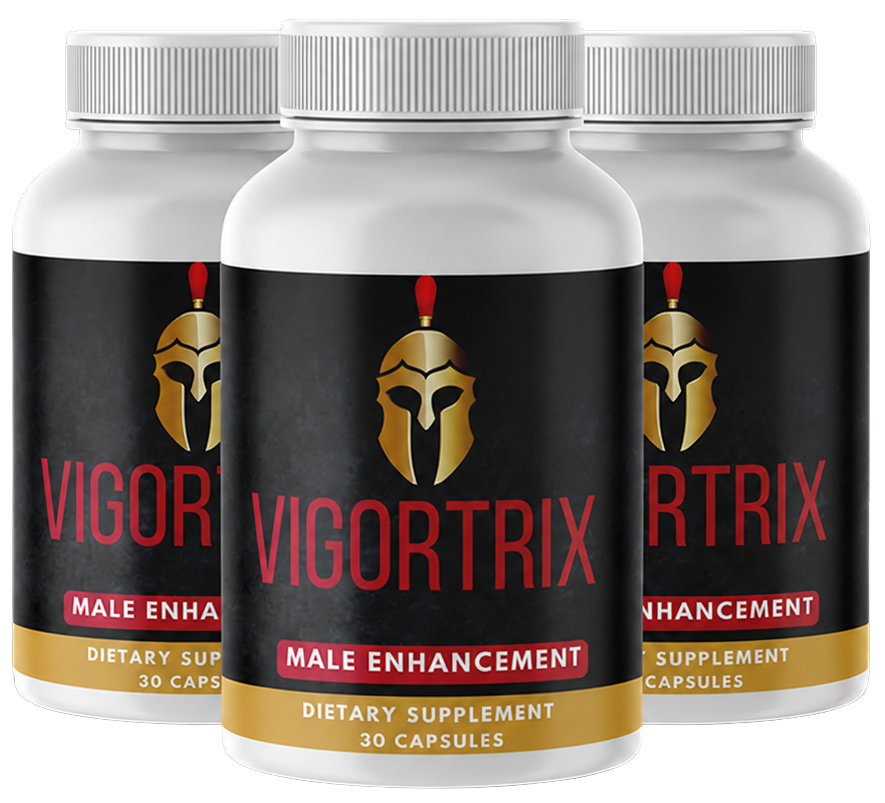
Testosterone replacement addresses one downstream output. PDE5 inhibitors address a different downstream output. Neither addresses both failures. Neither addresses the upstream cause. The nine compounds in Vigortrix address the Vitality Signal Failure from both directions simultaneously: restoring NO production and vascular function, rebuilding the testosterone-dopamine axis, and restoring the energy metabolism underlying sustained physical vitality.
If you have been told your labs are normal and to accept that this is just aging — the Vitality Signal Failure framework offers a different interpretation.
Dr. Daniel Mercer, MD, is a board-certified specialist in integrative medicine. The information in this article is for educational purposes only and does not constitute medical advice. Always consult a qualified healthcare provider before starting any supplement protocol, particularly if you are currently on testosterone therapy or taking prescription medications. Individual results may vary.
Affiliate disclosure: This article contains affiliate links. If you choose to purchase through links provided, Get Wellness Wire may receive a commission at no additional cost to you.
Scientific References
1. Cormio et al.. Placebo-controlled RCT: oral L-citrulline supplementation improved erection hardness scores in mild erectile dysfunction. Urology, 2011. [PMID 24372616]
2. Shukla et al.. Clinical study (75 infertile men): Mucuna pruriens significantly improved testosterone, LH, dopamine levels, sperm count and motility. Fertility and Sterility, 2009. [PMID 18973898]
3. Gonzales et al.. Double-blind placebo-controlled RCT: maca increased self-reported sexual desire in healthy men at 8 and 12 weeks. Andrologia, 2002. [PMID 12472620]

By Dr. Daniel Mercer, MD
Integrative Medicine Specialist · Get Wellness Wire
Our editorial standards require all health claims to be grounded in available research and presented without exaggeration. We do not endorse products we cannot describe accurately and fairly.