·
Hearing Health
·
8 min read
If the Ringing in Your Ears Never Stops — Your Doctors May Be Looking in the Wrong Place
What the Auditory Nerve Hyperactivation Cascade Reveals About the Real Root Cause of Tinnitus
By Dr. Daniel Mercer, MD · Integrative Medicine Specialist
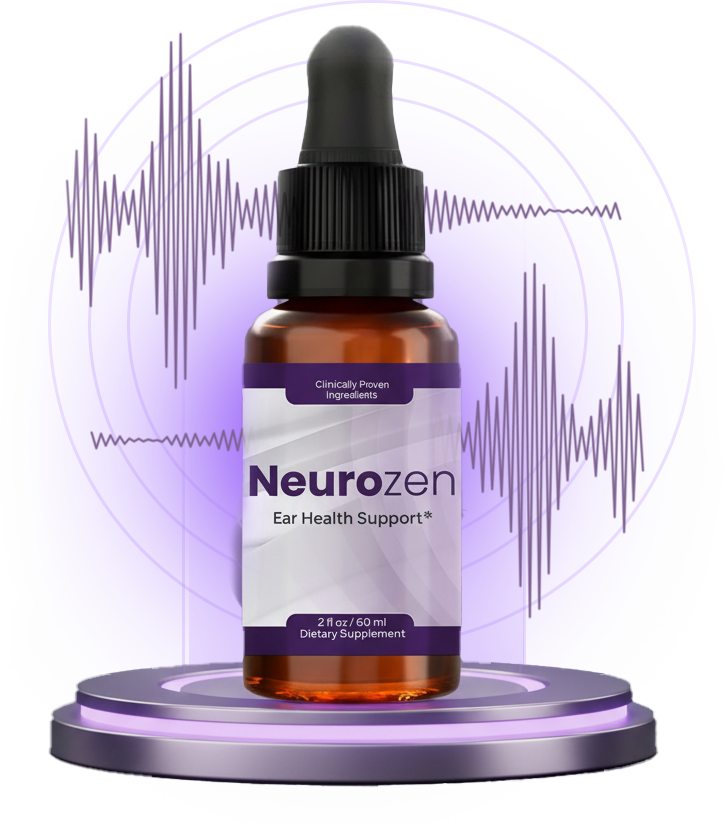
Affiliate disclosure: This article contains affiliate links to NeuroZen. If you purchase through them, we may earn a commission at no extra cost to you.
If you've been told that the ringing in your ears is permanent, that there's nothing to be done, and that your best option is to 'learn to manage it' — I want you to hear something different today.
Not because I want to give you false hope. But because the mainstream medical explanation for tinnitus is, in my clinical experience, incomplete in a way that is actively preventing millions of people from finding real relief.
I'm Dr. Daniel Mercer. I've practiced integrative medicine for 14 years, and a significant portion of my caseload involves patients who came to me after being dismissed by neurologists, ENTs, and audiologists who handed them a brochure about white noise machines and sent them home.
These patients didn't need to be managed. They needed to have the right mechanism explained to them — and then addressed.
What Conventional Medicine Gets Wrong About Tinnitus
The standard medical model treats tinnitus as a perception problem. Your ears are damaged — from age, noise exposure, or medication — and the auditory cortex generates phantom signals that your brain interprets as sound. The solution, according to this model, is to mask that signal: white noise machines, hearing aids tuned to 'cover' the ringing, or antidepressants and anti-anxiety medications that dampen your nervous system's response to the phantom sound.
This is not wrong, exactly. But it describes the end stage of a process that began much earlier — and that can, in many cases, be interrupted before permanent damage occurs.
The process I'm referring to is what I call the Auditory Nerve Hyperactivation Cascade. And understanding it changes everything about how you think about tinnitus.
The Auditory Nerve Hyperactivation Cascade: What's Actually Happening
Your inner ear contains some of the most fragile cells in the human body: the cochlear hair cells, tiny sensory cells embedded in the cochlea. These cells convert sound vibrations into electrical signals that travel via the auditory nerve to the brain. To function, they require a constant supply of oxygen delivered by micro-blood vessels called the stria vascularis.
When inflammation takes hold in these micro-vessels — triggered by oxidative stress, noise damage, or the normal aging process — blood flow to the cochlear hair cells drops. The cells become starved of oxygen.
Under oxidative stress, the hair cells begin producing abnormal electrical signals. Meanwhile, a critical system begins to break down: the GABAergic signaling pathway in the auditory cortex.
GABA is your brain's primary inhibitory neurotransmitter — the 'brake pedal' on neural activity. In a healthy auditory system, GABA helps regulate the stream of electrical input from the cochlea, filtering out noise and preventing runaway neural activity.
When cochlear damage disrupts the normal signal, and when GABAergic function is compromised by oxidative stress, the auditory cortex loses its ability to regulate that signal. Neurons fire continuously and abnormally. The brain interprets this pathological activity as sound — the ringing, buzzing, hissing, or roaring that tinnitus patients know all too well.
Cochlear microvascular inflammation → Oxidative damage to hair cells → Disrupted GABA signaling → Chronic auditory cortex hyperactivation → Phantom sound
No pharmaceutical drug currently on the market addresses this cascade at its root. Gabapentin, tricyclic antidepressants, benzodiazepines — medications most commonly prescribed for tinnitus — work by globally suppressing neural activity. They don't restore cochlear blood flow. They don't protect hair cells. They don't repair GABAergic signaling. They sedate the symptom while the underlying damage continues.
The Threat Nobody Talks About: Ototoxic Medications
Over 200 common medications are classified as ototoxic — directly toxic to cochlear hair cells. The list includes aminoglycoside antibiotics, loop diuretics like furosemide, certain chemotherapy agents, high-dose NSAIDs taken chronically, and several quinolone antibiotics.
The FDA requires these drugs to carry ototoxicity warnings in their labeling. But in clinical practice, these warnings are often underemphasized. Patients taking medications for infections, blood pressure, cancer, or chronic pain are rarely informed that these drugs may be quietly destroying their cochlear hair cells — contributing to or accelerating the very tinnitus and hearing loss they're experiencing.
Six Natural Compounds That Target the Cascade at Its Source
The encouraging finding from the integrative medicine research I've been following is this: the Auditory Nerve Hyperactivation Cascade is not an inevitable process. Several well-studied natural compounds act directly on the mechanisms that drive it.
GABA — Restoring the Brain's 'Brake Pedal' on Auditory Hyperactivity
GABA — gamma-aminobutyric acid — is the neurotransmitter that regulates neural firing in the auditory cortex. A growing body of neuroimaging research shows that tinnitus patients have measurably reduced GABAergic activity in auditory processing areas compared to people without tinnitus. Supporting GABAergic function directly — rather than suppressing the whole nervous system with a sedative drug — represents a fundamentally different approach to interrupting the cascade at its neurological source.
L-Glutamine — Repairing the Ear-Brain Neural Connection
L-Glutamine is the direct metabolic precursor to GABA in the brain. Without adequate L-Glutamine, the body cannot synthesize sufficient GABA to maintain normal inhibitory signaling in the auditory cortex. Beyond its role in GABA synthesis, L-Glutamine is essential for the repair of supporting cells in the cochlea — the non-sensory cells that surround and maintain the hair cells whose health is critical for normal cochlear function.
L-Tryptophan — The Serotonin Pathway and Sound Perception
Tinnitus severity is heavily modulated by the brain's emotional and sensory processing systems — which is why the same level of peripheral damage produces life-altering tinnitus in one person and a mild background awareness in another. L-Tryptophan is the precursor to serotonin, a neurotransmitter that plays a critical role in sensory gating — the brain's ability to regulate which sensory signals reach conscious awareness. L-Tryptophan also converts to melatonin, which has documented direct antioxidant effects on cochlear tissue and supports sleep, when the majority of cochlear repair processes occur.
Grape Extract — Protecting the Cochlear Hair Cells from Oxidative Damage
The proanthocyanidins (OPCs) found in grape extract are among the most potent antioxidants identified in nature — with antioxidant capacity up to 20 times greater than vitamin C. This matters specifically for cochlear hair cells because of a biological reality: cochlear hair cells do not regenerate in adult humans. Once destroyed by oxidative stress or ototoxic medications, they are gone permanently. OPCs protect these irreplaceable cells by neutralizing reactive oxygen species, while also improving endothelial function in the cochlear micro-vessels — directly addressing the microvascular component of the cascade.
Green Tea Leaf Extract — Preventing Age-Related Cochlear Degeneration
The primary active compound in green tea — EGCG — activates the Nrf2 pathway, the body's master antioxidant defense system. Studies show that EGCG reduces noise-induced cochlear hair cell death and attenuates age-related hearing decline. EGCG also inhibits the NF-κB inflammatory signaling pathway in cochlear tissue — the same inflammatory pathway that drives microvascular damage in the stria vascularis and accelerates the cascade.
Panax Ginseng — Circulation, Stress, and the Cochlear Blood Supply
There is a well-documented relationship between psychological stress and tinnitus severity. Cortisol — the primary stress hormone — causes vasoconstriction of the micro-vessels supplying the inner ear, worsening cochlear blood flow and amplifying the hyperactivation cascade. Panax ginseng's ginsenoside compounds improve nitric oxide-mediated blood vessel dilation, increasing cochlear microcirculation. Research has also identified that ginsenoside Rb1 specifically protects cochlear spiral ganglion neurons — the neurons of the auditory nerve itself — from oxidative injury.
What I've Seen in My Practice
Over the past year and a half, I've been recommending a specific formulation that combines all six of these compounds to patients with chronic tinnitus. I am not able to name the formula in this editorial context, but I can share what I've observed.
Patients who had been told their tinnitus was permanent — and who had resigned themselves to white noise machines, sleepless nights, and the growing social withdrawal that severe tinnitus causes — began reporting changes within two to four weeks of consistent use.
The ringing became quieter. The constant drone that had made it impossible to focus at work began to recede. Patients who had stopped going to restaurants, concerts, and family gatherings because of the noise began re-engaging with those activities.
One patient, a 63-year-old retired engineer from Texas, told me he had stopped watching television in the evenings because the combination of tinnitus and TV audio made it impossible to relax. After six weeks on this protocol, he said he'd watched three movies in one week. 'I forgot what quiet felt like,' he said.
Are all outcomes like this? No. Tinnitus is complex and outcomes vary. But I am seeing results with this protocol that I was not seeing when I had patients on pharmaceutical tinnitus management alone.
What People Are Saying
"Just two weeks after starting, the buzzing in my ears significantly decreased, my focus improved, and I finally slept soundly through the night. If it wasn't for this, I'd still be struggling with constant ringing, sleepless nights, and difficulty concentrating."
— Robert M., 63, Houston, Texas
"The tinnitus got so bad I avoided social situations and couldn't focus at work. Day by day, the buzzing became quieter. I can now concentrate easily again, and I feel totally confident in social settings — even in noisy environments."
— Margaret T., 68, Chicago, Illinois
"I was about to give up hope on ever finding a solution. My ears feel refreshed, I no longer have to strain to hear conversations, and I'm finally free from those annoying buzzing sounds."
— Linda E., 57, Seattle, Washington
The Presentation That Keeps Getting Flagged
A video presentation I recorded explaining the Auditory Nerve Hyperactivation Cascade and this six-compound protocol has been watched by millions of people since its initial release. It has been repeatedly flagged on social media platforms — because it directly challenges the premise that tinnitus is untreatable by anything other than pharmaceutical intervention.
I encourage you to watch the presentation while it remains accessible. It walks through the complete cascade mechanism, the evidence behind each compound, and the clinical data that convinced me to recommend this approach to my own patients.
⚠️ WARNING: Due to pressure from pharmaceutical industry groups, this presentation has been taken down and restored multiple times. Watch it while the link is active.
Before You Go
Tinnitus is not curable by any drug currently on the market. That is a medical fact. But the premise that tinnitus is therefore untreatable — that the only option is to suppress perception of it and hope for the best — is a conclusion that the evidence does not support.
The Auditory Nerve Hyperactivation Cascade is a real, describable, addressable process. The compounds I've described act on it at the level of cochlear microcirculation, oxidative defense, GABAergic signaling, and neural protection. They do not mask the symptom. They work on the mechanism.
Watch the presentation. Look at the evidence. Make your own decision.
Your ears deserve more than just white noise.
Dr. Daniel Mercer, MD, is a board-certified specialist in integrative medicine. The information in this article is for educational purposes only and does not constitute medical advice. Always consult a qualified healthcare provider before starting any new supplement protocol. Individual results may vary.
Affiliate disclosure: This article contains affiliate links. If you choose to purchase through links provided, Get Wellness Wire may receive a commission at no additional cost to you.
Scientific References
1. Shishtar et al.. Systematic review and meta-analysis: ginseng significantly reduced fasting blood glucose across populations. PLOS ONE, 2014. [PMID 25265315]

By Dr. Daniel Mercer, MD
Integrative Medicine Specialist · Get Wellness Wire
Our editorial standards require all health claims to be grounded in available research and presented without exaggeration.