·
Weight Loss
·
9 min read
If You've Been Dieting for Years and Still Can't Lose Weight — Your Doctor Probably Never Checked for This
The Real Reason Your Fat Cells Refuse to Burn: A Mechanism Called the "Insulin Overflow Loop" — and the Three Molecules That Break It
By Dr. Daniel Mercer, MD · Integrative Medicine Specialist
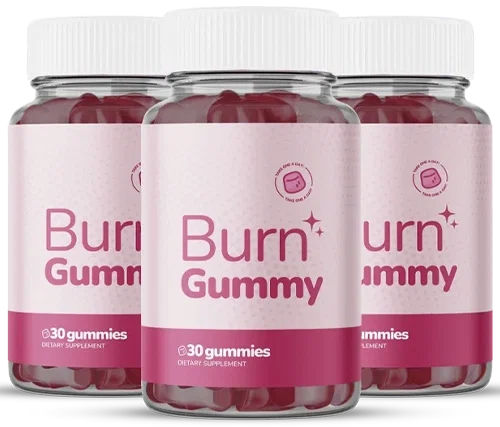
Affiliate disclosure: This article contains affiliate links to Burn Gummy. If you purchase through them, we may earn a commission at no extra cost to you.
Every patient describes it almost identically.
They've done everything right — or what they were told was right. They cut calories. They stopped eating sugar. They started walking, or returned to the gym. Some went through cycles of real discipline for months at a time. And the weight either won't move at all, or it moves briefly and returns the moment they relax.
The explanation they typically receive from their physician goes something like: "Your metabolism slows with age." Or: "You probably need to cut more calories." Or the most frustrating: "Some people just have a harder time losing weight."
I am Dr. Daniel Mercer, and after fourteen years practicing integrative medicine, I can tell you that explanation is not just incomplete — it is describing the wrong problem.
The real problem, in a large majority of people with stubborn, plateau-resistant weight, is not calorie math. It is a specific metabolic dysfunction that keeps fat cells permanently locked in storage mode, regardless of what you eat or how much you exercise.
I call it the Insulin Overflow Loop.
What Your Fat Cells Are Actually Waiting For
To understand why weight loss stalls, you need to understand how fat cells decide whether to store or release fat.
The answer is a single hormone: insulin. Insulin is released by the pancreas whenever blood glucose rises after a meal. Its primary job is to signal cells to take up glucose from the blood. In the process, it sends fat cells a very specific instruction: stay in storage mode. There is glucose available — use that for energy instead.
This is entirely normal. The problem is what happens when this signal becomes permanently, chronically elevated.
The Insulin Overflow Loop: How It Develops
Modern diets are high in refined carbohydrates and sugar. Every meal creates a glucose spike. Every glucose spike triggers an insulin response. Do this often enough, and the cells receiving insulin — primarily muscle and liver cells — begin to downregulate their insulin receptors. They become insulin-resistant.
When cells become insulin-resistant, the pancreas interprets the blunted response as "not enough insulin" and produces more. Insulin levels rise further. This is hyperinsulinemia — chronically elevated insulin even between meals.
Here is where the loop becomes a trap. Elevated insulin does two things to fat cells simultaneously. It suppresses hormone-sensitive lipase (HSL) — the enzyme required to break down stored fat and release it into the bloodstream. And it upregulates lipoprotein lipase (LPL) — the enzyme that actively pulls fat from the blood into fat cells for storage.
Fat cells locked in storage mode. Fat oxidation blocked. More fat being pulled in.
This is the Insulin Overflow Loop. And it cannot be broken by eating less. Calorie restriction without addressing insulin resistance makes it worse — you're starving the body of energy while the fat remains locked away, driving hunger, cravings, fatigue, and eventually metabolic slowdown as the body protects its reserves.
Why Conventional Medicine Misses It
GLP-1 receptor agonists (semaglutide — Ozempic, Wegovy) produce real weight loss by suppressing appetite centrally and slowing gastric emptying. But they cost $900–$1,400 per month without insurance, require weekly injections, cause nausea and vomiting in a significant percentage of users, accelerate lean muscle loss alongside fat, and require ongoing prescription and medical supervision. They also do not address the underlying insulin resistance driving the IOL.
Metformin activates AMPK — the master metabolic switch — and improves insulin sensitivity. It requires a prescription, causes GI distress in roughly 30% of users, and depletes vitamin B12 with long-term use.
Orlistat blocks fat absorption by inhibiting pancreatic lipase. It does not address the IOL at all, and its side effects — oily stools, fecal urgency — are well-documented.
None of these approaches target what actually maintains the Insulin Overflow Loop: impaired insulin receptor signaling, chronically elevated insulin, and fat cells locked in storage mode. What does?
The Three Molecules That Break the Loop
Clinical research has identified three naturally-occurring compounds with specific, documented mechanisms relevant to each stage of the IOL. Together, they address the problem from multiple angles.
Chromium Picolinate — Restoring Insulin Receptor Sensitivity
Chromium is an essential trace mineral most people are chronically deficient in — modern food processing strips it from grain-based foods. It functions as a cofactor for insulin receptor signaling, specifically potentiating the tyrosine kinase activity of the insulin receptor. Without adequate chromium, insulin binds to its receptor but produces a blunted signal. The cell "ignores" the message. Chromium picolinate — the highest-bioavailability form — corrects this at the receptor level, reducing fasting glucose, improving HbA1c, and eliminating the hypoglycemic rebound that drives compulsive sweet cravings. The cravings are not a willpower problem. They are a receptor signaling problem.
Berberine HCl — Activating the Master Metabolic Switch
Berberine is the compound that made metabolic researchers take notice. In multiple human RCTs, berberine has been compared head-to-head against metformin for blood glucose control in type 2 diabetes — and found to produce comparable outcomes. The mechanism: berberine activates AMPK (AMP-activated protein kinase), the master metabolic switch. When AMPK fires, it simultaneously increases glucose uptake via GLUT4 translocation, enhances fatty acid oxidation, and inhibits lipid synthesis. It also inhibits PTP1B — an enzyme that inactivates insulin receptors — making existing insulin signal more efficiently. In practical terms: berberine does what the Insulin Overflow Loop prevents. It unlocks the cellular machinery for glucose uptake and fat burning that hyperinsulinemia had suppressed.
Cinnamon Bark Extract — Flattening the Glucose Curve
Cinnamon bark's bioactive compounds — cinnamaldehyde, cinnamic acid, and Type-A procyanidins — improve insulin sensitivity through multiple converging pathways. Type-A procyanidins directly activate the insulin receptor's tyrosine kinase domain independent of insulin binding, functioning as insulin mimetics. Cinnamaldehyde activates PPAR-gamma, the nuclear receptor regulating adipocyte insulin sensitivity. Cinnamon also physically slows gastric emptying, flattening post-meal glucose curves. A landmark 2003 study in Diabetes Care found cinnamon reduced fasting blood glucose by 18–29% over 40 days at doses similar to those in this formula.
What I've Observed
About a year ago, I began recommending a formula containing all three of these compounds to patients presenting with metabolic syndrome markers and plateau-resistant weight — people who had been told to "just try harder" by other physicians.
The first thing they describe, typically within the first one to two weeks, is a change in cravings. The urgent, compulsive sugar and carbohydrate hunger that had been driving their dietary failures diminishes. This is the chromium effect — insulin receptor signaling improves, the hypoglycemic rebound weakens, and the craving signal quiets.
By weeks three to four, the energy pattern changes. The mid-afternoon crash — that familiar dip around 2–3pm — becomes less pronounced. This reflects more stable blood glucose. The metabolic peaks and valleys smooth out.
By weeks six to eight, weight begins to shift in patients who had been completely plateaued for months or years. This is metabolic recalibration — the fat cells slowly coming out of permanent storage mode as insulin sensitivity improves.
The Comparison Nobody Talks About
Berberine has been studied in clinical trials directly against metformin — a $15 billion prescription drug — and performed comparably. This is not obscure alternative medicine. This is peer-reviewed pharmacology published in Metabolism, the Journal of Clinical Endocrinology, and PLOS ONE.
The fact that this comparison is not standard information in a general practitioner's office is not a scientific problem. It is a structural one. The Insulin Overflow Loop, and berberine's role in breaking it, exist in the published literature. They are simply absent from the patient conversation.
⚠️ WARNING: Due to pressure from pharmaceutical industry groups, this presentation on the Insulin Overflow Loop has been removed and reposted multiple times. Watch it while the link is active.
What People Are Saying
"I'd been plateaued for eight months. Same weight, same tired mornings, same cravings no matter what I did. After six weeks the afternoon crash was just... gone. And the scale actually started moving. First time in almost a year."
— Hailey A., 49, Austin, TX
"The sugar cravings were the thing I couldn't beat. I'd hit a wall by 3pm and eat everything in sight. I've been on this for two months and the wall isn't there anymore. It sounds small but it changed everything."
— Dana H., 54, Chicago, IL
"I appreciate that it's just three real ingredients at the doses the studies actually used. No proprietary blend nonsense, no stimulant jitters. I feel calmer, clearer, and I've lost 11 pounds in 10 weeks without changing much else."
— Megan S., 46, Portland, OR
Before You Close This
The Insulin Overflow Loop is not a willpower problem. It is not an age problem. It is a cellular signaling problem — one created by modern dietary patterns and maintained by the chronically elevated insulin they produce.
Fat cells locked in storage mode cannot be unlocked by eating less. They require restored insulin receptor sensitivity (chromium), reactivated AMPK signaling (berberine), and improved post-meal glucose dynamics (cinnamon). Each molecule addresses a different point in the loop.
Watch the presentation. Read the evidence. Make your own decision.
Dr. Daniel Mercer, MD, is a board-certified specialist in integrative medicine. The information in this article is for educational purposes only and does not constitute medical advice. Always consult a qualified healthcare provider before starting any supplement protocol. Individual results may vary.
Affiliate disclosure: This article contains affiliate links. If you choose to purchase through links provided, Get Wellness Wire may receive a commission at no additional cost to you.
Scientific References
1. Liang et al.. Meta-analysis of 46 RCTs: berberine significantly reduced HbA1c (MD −0.73%) and fasting blood glucose. Oxidative Medicine and Cellular Longevity, 2021. [PMC8696197]
2. Lu et al.. Meta-analysis of 16 RCTs in T2D and pre-diabetes: cinnamon significantly reduced fasting blood glucose. Clinical Nutrition, 2019. [PMID 31425768]
3. Abdollahi et al.. RCT: chromium picolinate significantly reduced insulin resistance in women with PCOS. Journal of Obstetrics and Gynaecology, 2015. [PMID 26663540]

By Dr. Daniel Mercer, MD
Integrative Medicine Specialist · Get Wellness Wire
Our editorial standards require all health claims to be grounded in available research and presented without exaggeration. We do not endorse products we cannot describe accurately and fairly.